 Fantasy and Science Fiction: The Human Mind, Our Modern World Coursera Assignment 6
The Invisible Man
When Mr. Cuss, the general practitioner who interviewed the strange Mr. Griffin in “The Invisible Man,” his doctor’s sense of smell detected the aroma of evening primrose among the chemicals that permeated the premises of the Coach and Horses Inn. As Iping’s physician, Cuss would have been familiar with folklore touting the benefits of “evening primrose as a soothing remedy for coughs associated with colds” (1). Furthermore, Griffin may have used the plant to ease digestive problems, skin irritations, and depression. However, it is evening primrose’s symbolic representation that gives us clearer insight into the Invisible Man.
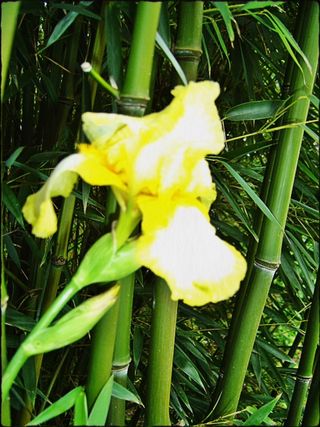
Suffice it to say, Griffin was a man of inconstancy. Not only was there a changeability of his bodily form, Griffin’s personality was given to unpredictable impulses. It is no coincidence that H. G. Wells inserted evening primrose into his grotesque romance (2). Referencing the Victorian study of floriography, or the language of flowers, it is suggested the yellow, lemon-scented blossom is known as “Code Name Inconstant” (3).
Floriography flourished during the 19th century, particularly with women, as it provided a secret means of communicating during an era of strict moral codes. Everything from flirtation to motherhood to commentary on the lower classes could be addressed through the careful arrangement of flora. For example, a dahlia signified forever thine. Flax tucked into a bouquet reassured a confidante that I feel your kindness. Lavender put one on notice that an air of distrust had arisen. A nosegay of evening primrose was a warning to a sister of a certain gentleman’s inconstancy where it concerned matters of the heart.
Perhaps floriographical observations were embedded in the cypher that filled Griffin’s diaries. Between the pages of mysterious figures that hid the secret of his existence, a faded yellow flower served as a memento of Griffin’s fickleness in establishing himself among the ranks of men.
Works Cited:
(1) Lust, John. The Herb Book, Bantam Books, 1974
(2) Wells, Herbert George. The Invisible Man: A Grotesque Romance, 1897
(3) Powell, Claire. The Meaning of Flowers: A Garland of Plant Lore and Symbolism from Popular Custom and Literature, Shambhala Publication, 1979
 Semi-Daily Scribbles
Leave a comment