

Carving out a corner to post random crap.
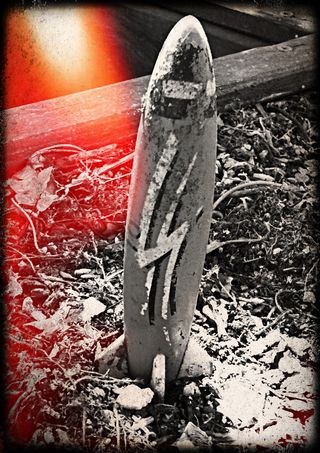
Fantasy and Science Fiction: The Human Mind, Our Modern World – Coursera Assignment 8
The Martian Chronicles
The stories comprising "The Martian Chronicles" all speak to one's acceptance of what is real. When one understands what reality is, truth leads to clarity of thought. Once intention is established, the individual must act in accordance with his convictions.
In the case of archaeologist Jeff Spender, crewman on the fourth mission to Mars, what he recognized as reality put him at odds with the purpose of the expedition. Spender knew the Earth Men's roving was not going to simply stop at scientific discovery for the benefit of humankind. After all, there was no profit to be had in the silver book he read of ancient Martian customs. What good is history to a people that need more space for open-pit mines, planned communities, and hot dog stands?
By interpreting artifacts, Spender believed the Martians were better attuned to their environment than humans were to their homeland. He was in awe of the Martian ability to allow wild, untamed nature to thrive alongside the more controlled aspects of keeping a civilization in check. Spender’s crewmates, however, did not share his reverence for the ruins. They were satisfied with the conquest of planting their flag in alien soil. They paved the way for human settlement. This was their reality, but it wasn't the future Spender envisioned. He thought killing those who didn't share his philosophy was a small price to pay to spare the remains of a more civilized race.
Preserving a bygone way of life over the encroachment of business as usual transformed the idealistic Spender into an ideologue. His reality, built upon a perfect Martian society, steered him toward extremism. Spender's own admission to Captain Wilder that he was "a very crazy fellow who went berserk one summer day and never was right again" shows us how the real and the imagined are not always easy to separate.
Works Cited:
Bradbury, Ray. The Martian Chronicles, Simon & Schuster Paperbacks New York, March 2012
 Zoë saw the Out-of-Timers everywhere. They were not hard to miss. Any number of Timers could be spotted wearing suits of armor, or crinolines, or tattered animal skins. Along with the numbers of visitors increasing each day, there was the number itself. That number. They all had a 4 etched or embroidered somewhere on their person. Even the Neanderthal sightseers had dark blue lines scrawled in the shape of a 4 tattooed on their arms. What do they want? Zoë wondered as the #63 stopped to pick up downtown-bound passengers. A battle ready samurai was the last man to board the bus, and he sat down next to Mrs. Rao. She didn’t even look up from her paperback romance. Zoë rose from her seat to approach the imposing figure that was adjusting the broadsword strapped to his back.
"Uh, hi. I was admiring your costume. It's very authentic looking. Must have cost you a fortune. Is that a four inscribed on your breastplate?" The samurai didn't acknowledge Zoë as she stood in the middle of the bumpy bus pointing at his chest. "I don't mean to be rude," she continued, “but there have been people dressed up in all sorts of getups lately, and, well…I think I'm the only one who can see you." Zoë looked over at Mrs. Rao who was lost in the story she was reading, her lips forming the words as quickly as her eyes plucked them from the page.
"Yes. That is the number four, and yes, you are the only one who can see me." Zoë jumped and stumbled off balance at the man's sonorous reply. There was an echo hanging on the air of the stuffy bus, but no one else heard the samurai speak.
"That's good to know, I suppose. Can I ask you why you're here? Is there something I'm supposed to do? If I can help in some way, maybe you and the others can get back to where you belong." The samurai frowned as he looked at Zoë. He sat staring at her for a time, engaged in meditative, deep breathing that caused Zoë's pulse to race.
"'I'm not supposed to bear this mark," the samurai said as he looked down at the ornate four tooled into the leather of his combat attire. "The others are like me. We have lost our place in the telling of things. You know how to put us back in good standing. Why else would you have opened the gate?" It was Zoë 's turn to stare at the samurai. His words were a puzzle and her quick, shallow breathing was making her lightheaded.
"Right. Me and those damned gates. I should know better than to go near those things."
And now for something completely different…the reviews for my Unit 7 assignment!
FORM
student1 → Flows nicely and is easy to read. Nice choice of words. (Grade: 2)
student2 → Grammar: good. Usage: good, Structure: perhaps less than good. I can't tell that paragraph 2 is saying anything different in scope from paragraph 1 Paragraph 5 seems to be intended as a summary of what seems to be the thesis which seems to be about "manifest destiny." But in that summary, you use the word "destiny" in the first sentence and "manifest" in the second sentence but neither word, used separately, has any connection (in meaning) to the particular meaning of the idea "manifest destiny" which applies to particular goals of the United States as a country, in the nineteenth century.
student3 → The exposition and argument laid out are not clear. Sentences need to be revised to make sure they are coherent. It will benefit the author to improve word usage.
student4 → your conclusion has to be taken care of… you can end your essay more effectively.
Score from your peers: 2
CONTENT
student1 → Your thesis is well stated and well supported. Showing that Carter and Nicholson are “poster boys for Manifest Destiny” is clever and insightful. One point that makes your argument weaker is the final sentence: “However, not every dream can manifest itself, and many are left behind in the mad dash towards exceptionalism.” This final sentence is more a statement of your belief than it is an argument for your position. Perhaps a better ending would have shown that Carter and Nicholson had far different results when manifesting their destinies. (Grade: 2)
student2 → As described under structure in my comments on form, it is hard to figure out what your theme really is and, therefore, whether you accomplished the goal of supporting it. There is a lot of descriptive ideas about Carter and Nicholson but those ideas do not support your thesis, assuming it is to elucidate the idea of manifest destiny. If it isn't then you did not clearly state your thesis to me and that is even worse. I would have to say that this essay rambles. Finally, I don't think the personalities of Carter and Nicholson are the main thrust of the novels. Their thrust is to talk about the different versions of utopian societies each character is discovering. I would like to have read an essay about that, but would accept an essay about the character of the two men, had it been more than rambling, unconnected ideas satisfying a thesis by means of logical structure that winds up proving or at least supporting your thesis.
student3 → The argument is not persuasive when comparing the two tales, deep understanding of the insights is not reflected. I believe the writer will need to focus more on concrete details. With a little work your essays will improve.
student4 → your style of comparison is really good… both the characters have the same kind of characteristic traits.
Score from your peers: 2

Fantasy and Science Fiction: The Human Mind, Our Modern World – Coursera Assignment 7
A Princess of Mars & Herland
John Carter and Terry O. Nicholson were adventurers with qualities of rugged individualism and pulling oneself up by the bootstraps. Whether leaving a trail of bodies across the surface of Mars, or routing out a lost tribe in the rainforest, Carter and Nicholson made their own luck. Prosperity could be had by one and all as long as the good fight was fought. These ideals make them the perfect poster boys for Manifest Destiny.
Burroughs's Carter and Gilman's Nicholson represent the dream of personal freedom and economic advancement that were cornerstones in the United States’ westward expansion during the mid-1800’s. The country’s population increased, and fiscal crises prompted the government to broaden its economy. In the wake of acquiring more land, the seeds of wealth and self-governance were planted. However, Native Americans and persons of non-European ancestry weren’t invited to reap the benefits of Manifest Destiny.
John Carter had a vision of what made an officer and a gentleman. He could hold his own as a self-made man against the savage Apache. As soon as his expedition took him from Arizona to outer space, he viewed the inhabitants of Mars in a similar vein. Carter had preconceived notions about how society should function, and he knew how to exploit Martian resources to his advantage.
Terry Nicholson, Carter’s counterpart in another time and place, embarked on his own voyage of discovery that brought him to Herland where, before long, he was seeing dollar signs. Nicholson was a man of privilege, and he thought everyone should be able to bankroll jungle excursions. Paradise was ripe for the picking thanks to the efforts of a society that Nicholson despised.
Carter and Nicholson considered destiny something created through hard work and ingenuity. However, not every dream can manifest itself, and many are left behind in the mad dash towards exceptionalism.
Works Cited:
Greenberg, Amy S. Manifest Destiny and American Territorial Expansion: A Brief History with Documents
Burroughs, Edgar Rice. A Princess of Mars
Gilman, Charlotte Perkins. Herland
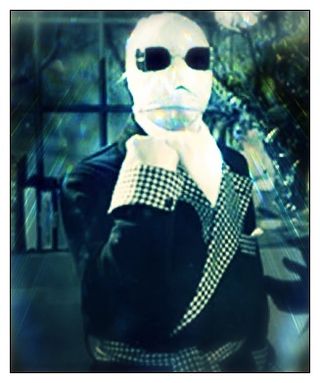 I'm chock full of creative bits, but I'd have to say I'm experiencing a serious lack of imagination when it comes to these writing exercises. In fact, I'm finding that I'm exerting extra effort in clearing the fog from my brain and wiping gauzy film from my eyes. In the spirit of full disclosure, these essays are feeling like a chore. I'll continue to submit my thoughts on our weekly reading, and I may even jump into the fray of Essay, or not to Essay? It's really too bad the question made the rounds over on the Coursera discussion boards. I would be delighted to review a student's story about an invisible, Runasimi-speaking astronomer and his sloth sidekick washed ashore on a desert island. As far as I'm concerned, if it's 320 words worth of creativity, I'm all for it. It would be no lousy development within the framework of this course to review a composition that someone had fun writing from beginning to end.
Week 6 is completed. Here's what my classmates had to say about my H.G. Wells assignment:
FORM
student1 → The form of your essay was good, well managed with good sentence structure. The words are properly use and the argument laid out clearly. I give it a 3 since I have nothing negative to say. 🙂
student2 → The beginning sentence is quite awkward however you were clear in the rest. I wasn't sure if you were quoting something from the book or just using the language from within.
student3 → Your form is exceptional, and I don't see any items to comment upon within your essay. Great job. form :3
student4 → A couple of problems with continuity, for example: "When Mr. Cuss, the general practitioner who interviewed the strange Mr. Griffin in “The Invisible Man,” his doctor’s sense[…]" Let's get that apposition out, does "When Mr. Cuss his doctor's sense" have any sense? . Nevertheless, grammar and word use is mostly correct.
Score from your peers: 2.5
CONTENT
student1 → I certainly learned more about floral arrangements and history that I had known in the past but I did not see a clearly laid out argument that was persuasive or revealed anything new about the novel itself. I was not persuaded that the evening primrose was significant in the way you laid out the argument. There was too much history and not enough information on how the flower itself may have influenced his behavior. But it was interesting so it gets a two from me.
student2 → The background information concerning the language of flowers was interesting, but it seems more that you alluded to the significance of the primrose instead of coming right out and saying it. Sometimes direct is best.
student3 → You did am amiable job writing this essay and I applaud you. However there is definitely a lot of work for improvement in the content of your essay. Although you did a great job composing your essay with compelling verbiage your thesis is muddled and lacking. Your statement of "However, it is evening primrose’s symbolic representation that gives us clearer insight into the Invisible Man." Seems strong and bold however you did not actually state what this symbolic representation was, that is so clear to you but not to the reader. Your following paragraph states "suffice it to say Griffin was a man of inconstancy" which would have been great argumentative support but again you did not state this in the symbolic representation of your thesis. Leaves the reader confused until the middle of your essay where you mention "code name inconstant". Your following paragraph although insightful to the art of floriography, is a little lengthy and irrelevant to your argument about the use of primrose. Finally your incredibly bold statement of primrose giving clearer insight to the invisible man seemed a little over stated as your biggest argument was in reference to Griffin being an inconstant individual. I hope you don't take this as me disagreeing with your argument as when I begun your essay I was very interested and was hoping for something very insightful. I think you may be on to something, but you need to work on your delivery and strength of your arguments. Content:1
student4 → Seems a bit more of an entry on floriography rather than an actual essay regarding Wells' nove thanks to that third paragraph. It was unnecesary to give so much examples in it, since the extension of the text doesn't give you the opportunity to make a more detailed analysis.
Score from your peers: 2
Please write here any other comments which you feel might be of use to you or the writer of this essay.
student2 → I did enjoy reading this added aspect to these stories, however, it was quite unfortunate to have such a hard to parse first sentence.
student3 → You still did a great job and I hope you do continue to work hard at improving your essays.
student4 → The idea seemed interesting, but the development was a bit lousy.
 Fantasy and Science Fiction: The Human Mind, Our Modern World Coursera Assignment 6
The Invisible Man
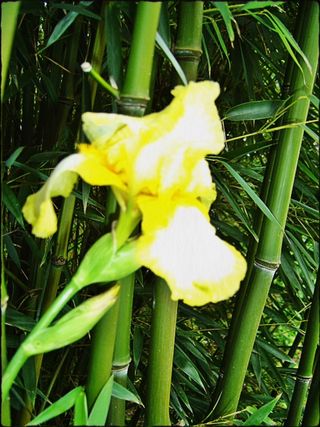
When Mr. Cuss, the general practitioner who interviewed the strange Mr. Griffin in “The Invisible Man,” his doctor’s sense of smell detected the aroma of evening primrose among the chemicals that permeated the premises of the Coach and Horses Inn. As Iping’s physician, Cuss would have been familiar with folklore touting the benefits of “evening primrose as a soothing remedy for coughs associated with colds” (1). Furthermore, Griffin may have used the plant to ease digestive problems, skin irritations, and depression. However, it is evening primrose’s symbolic representation that gives us clearer insight into the Invisible Man.
Suffice it to say, Griffin was a man of inconstancy. Not only was there a changeability of his bodily form, Griffin’s personality was given to unpredictable impulses. It is no coincidence that H. G. Wells inserted evening primrose into his grotesque romance (2). Referencing the Victorian study of floriography, or the language of flowers, it is suggested the yellow, lemon-scented blossom is known as “Code Name Inconstant” (3).
Floriography flourished during the 19th century, particularly with women, as it provided a secret means of communicating during an era of strict moral codes. Everything from flirtation to motherhood to commentary on the lower classes could be addressed through the careful arrangement of flora. For example, a dahlia signified forever thine. Flax tucked into a bouquet reassured a confidante that I feel your kindness. Lavender put one on notice that an air of distrust had arisen. A nosegay of evening primrose was a warning to a sister of a certain gentleman’s inconstancy where it concerned matters of the heart.
Perhaps floriographical observations were embedded in the cypher that filled Griffin’s diaries. Between the pages of mysterious figures that hid the secret of his existence, a faded yellow flower served as a memento of Griffin’s fickleness in establishing himself among the ranks of men.
Works Cited:
(1) Lust, John. The Herb Book, Bantam Books, 1974
(2) Wells, Herbert George. The Invisible Man: A Grotesque Romance, 1897
(3) Powell, Claire. The Meaning of Flowers: A Garland of Plant Lore and Symbolism from Popular Custom and Literature, Shambhala Publication, 1979


 Semi-Daily Scribbles