 This week's peer assessments may have a bit of prickliness attached, but they are certainly not a thorn in my side. On the contrary, the comments I've received on the Hawthorne essay are some of the more interesting and helpful to cross my computer screen. Reading through the comments, it appears as though I understand the mechanics of writing, but my message isn't connecting with the audience.
Once an essay has been submitted, there is the element of "How's this gonna play in Poughkeepsie?" that I find intriguing. I'm a believer in listening to different perspectives and considering all constructive feedback. I even take the comments from week to week and see if there's anything I may apply to the novel I'm working on. It's gratifying to have people read my writing. If something doesn't ring true for a reader in 320 words, I take stock of the shortcomings and seek to improve my ability to communicate. One thing is for certain. I always have something to say. The goal is to have my words sound right to as many sets of ears as possible.
Here's how my peers reviewed my Unit 5 assignment ~
FORM
student1 → Good grammar, verb tenses. The essay is easy to read and understand.
student2 → Great language use.
student3 → Intro seems a bit disjointed; lots of interesting thoughts, but need a bit more coherence. Otherwise, follows nicely intellectually, and conclusion is a lovely finish.
student4 → You can write, good style and fluid. I've nothing to pick on at all – 2 points from me. For 3 points, I'd be looking for a more creative delivery as the grading guide below suggests: "writes in ways that are particularly vivid or uses particularly incisive key terms to focus the argument or in some other way is outstanding in usage or structure"
student5 → The form is too complicated and it actually looks like it has been made complicated ON PURPOSE. It doesn't help to percept the content at all.
Score from your peers: 2
CONTENT
student1 → Just excellent.
student3 → If Owen is a transcendentalist, I think it's worth pursuing why then he finds inspiration in the mechanical as opposed to another artistic medium–painting, writing, etc.? We often posit the mechanical (read artificial) in direct contrast with the natural, but here they're inexorably intertwined. And, in the mechanical butterfly standing as the fairer specimen, it's almost as if human has triumphed over nature, rather than being one with it. Perhaps this is why the butterfly needed to be destroyed? For though it's the fairer specimen, it's not the 'truer' one? Just thoughts.
student4 → Excellent content, especially for such a short essay. I would have left out the Emerson paragraph though, and given more meat to your main thesis. You haven't tied it in with your main thesis and it's almost an entire thesis in itself. 2 points from me. I think with a little more content, would have been a 3.
student5 → Possibly, because of puzzling form, but I could not catch the main idea of the essay.
Score from your peers: 2

Fantasy and Science Fiction: The Human Mind, Our Modern World – Coursera Assignment 5
Mosses from an Old Manse and Other Stories
It wasn’t wretchedness or an aversion to work that made Owen Warland dwell in the dark regions of his mind, alternating between passionate states of doubt and elation. After all, as Hawthorne’s “The Artist of the Beautiful” showed us, Owen was a skilled mender of timepieces when he applied his faculties. His troubles, however, stemmed from not extending that same dexterity to knowing his own soul. It is no flight of fancy to surmise that along with Owen’s disdain of Father Time, he was also a student of Transcendentalism (1).
When viewed through the lens of Transcendentalism, we gain knowledge of Owen’s penchant for wasting “the sunshine, as people said, in wandering through the woods and fields and along the banks of streams” (2). He was doing more than flitting about like a butterfly. He was practicing a philosophy where, by immersing himself in the pure joy and perpetual inspiration found in nature, his spiritual body could ascend to a place of visionary reason rather than brutish understanding.
Owen perceived his path to the divine was through his works, and this is when the butterfly became more than the sum of its mechanical parts. The case can be made that Owen’s inspiration for his clockwork butterfly came to him after reading R.W. Emerson's essay titled "Art" (3). In it, Emerson posits: “In landscapes, the painter should give the suggestion of a fairer creation than we know. The details, the prose of nature he should omit, and give us only the spirit and splendor.”
Owen took to heart the concept of the sublime, but he also discovered being an artist of the beautiful was to embrace alienation. He believed his fellow man clung to an outmoded, false knowledge, and that they’d never see the utility in beauty. Owen’s art, his true occupation, was the crafting of a universal perception of the everyday divine.
Works cited:
(1) Goodman, Russell, "Transcendentalism", The Stanford Encyclopedia of Philosophy (Spring 2011 Edition), Edward N. Zalta (ed.)
(2) Mosses from an Old Manse and other stories, Nathaniel Hawthorne
(3) Essays, Ralph Waldo Emerson, James Munroe Company Boston 1841, Essay XII
Because the soul is progressive, it never quite repeats itself, but in every act attempts the production of a new and fairer whole. This appears in works both of the useful and the fine arts, if we employ the popular distinction of works according to their aim, either at use or beauty. Thus in our fine arts, not imitation, but creation is the aim. In landscapes, the painter should give the suggestion of a fairer creation than we know. The details, the prose of nature he should omit, and give us only the spirit and splendor. He should know that the landscape has beauty for his eye, because it expresses a thought which is to him good: and this, because the same power which sees through his eyes, is seen in that spectacle; and he will come to value the expression of nature, and not nature itself, and so exalt in his copy, the features that please him.
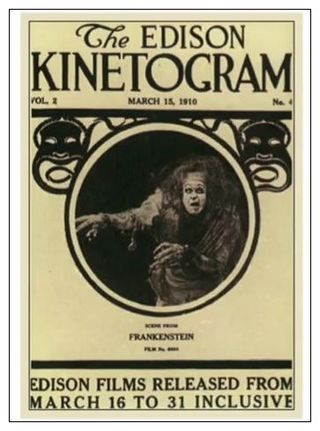
The “Frankenstein” results are in, and I'm happy with the peer assessments. The downside I see to the comments offered up is that only three fellow students weighed in. This is the fewest respondents I've had review my work, so perhaps this turned out to be a light week for submissions. I've always been a slow reader, so I'm finding it challenging to complete the reading and writing requirements on time. Thankfully, I've whipped my lazy brain into shape and have settled into a routine. Here's hoping my head of steam doesn't evaporate before we turn in our final essay.
I need to move on to a little Hawthorne this evening, so here is the feedback on my Unit 4 assignment:
FORM
student1 → Solid form, use of language and structure. Logical flow of argument. The grammar and words are well used, the writer is clear about what s/he wants to say.
student2 → I thought your writing was good. I really have no criticism.
student4 → Dang, this is really good!
Score from your peers: 2.5
CONTENT
student1 → First of all, better essay I've read until now. First 6 I am going to give 😀 You notice something very interesting from the very first line of your essay, with the Dr not wanting to give the creature a name. I really enjoyed the comparison with "Werther". "this is what rips each of them away from those whom they love." Loved this. I enjoyed the topic you chose and your writing, you made your thesis clear and convincent, that's why I am giving you a 6.
student2 → At first read-through, I had intended to give you a "1" for content. I have not read "The Sorrows of Young Werther," and I don't think it's fair to your audience to assume knowledge on their part. However, I had another essay to grade where all the person did was sum up the story, and that's even more unacceptable, so they're getting the "1." But next time, at least please sum up the story to which you're comparing the assignment, so that the reader will have some frame of reference. I know space is limited in these essays, but leaving that out is false economy.
student4 → Again, great job! Very well laid out, easy to understand, and incredibly insightful. Kudos on keeping your references in the works cited section too, to save you some words in the main essay. Really, very impressive indeed.
Score from your peers: 3
Please write here any other comments which you feel might be of use to you or the writer of this essay.
student1 → Keep up the good work, hope to read more from you! I wish I could have a chat with you someday 🙂
 Fantasy and Science Fiction: The Human Mind, Our Modern World – Coursera Assignment 4
Frankenstein
When Victor Frankenstein cobbled together his creation of disparate flesh, he neglected to give the being a name. Monster, Creature, Fiend, and Devil are used throughout the novel when referring to the re-animated man. However, because of a chance find of a portmanteau (1), it can be deduced that Frankenstein’s unnatural offspring chose to think of himself as Werther, after the character in “The Sorrows of Young Werther” by Johann Wolfgang von Goethe. Similarities exist between Frankenstein’s creation, and that of Goethe’s, and it is not surprising that the monster of Mary Shelley’s imagination identified with Werther’s anguish.
An element that forms a bond between Frankenstein’s nameless man and Werther is their relationship with nature. They are both more at home within the natural world than communing in the society of men. Bird song and the rising of the sun provide the creature with an understanding of the mysterious environment in which he’s been released, but nature’s lessons also inform him of his limitations (2).
In a similar sense, Werther’s delight and torment comes from the loveliest woods and the music of birds. He can’t understand why mankind would turn away from these gifts, and it pains him to be in the company of those who do not appreciate nature in all its glorious forms (3). Werther and Frankenstein’s creation view the savage beauty of nature as being more constant than human nature, which neither is adept at understanding.
By observing the natural world, the creature learns that he is something unnatural. There is no place for him amongst humanity. Likewise, Werther’s place in society is questioned because he can’t articulate his sentimental feelings about the world he inhabits. Neither can communicate his suffering, and this is what rips each of them away from those whom they love.
Works cited:
(1) Frankenstein, Mary Shelley
Chapter XV
I found a leathern portmanteau, containing…some books…they consisted of “Paradise Lost,”…“Plutarch's Lives,”…“Sorrows of Werther.”
(2) Frankenstein, Mary Shelley
Chapter XI
I tried to imitate the songs of birds, but was unable. I wished to express sensations in my own mode but inarticulate sounds which broke from me frightened me into silence again.
(3) The Sorrows of Young Werther, Johann Wolfgang von Goethe
Letter, August 18
Everything is alive with infinite number of forms…mankind fly for security to petty houses…they rule in their imaginations over the wide-extended universe.
 I've been working on the essay feedback received over the past two weeks. I'm fortunate that the students who've read my work have been thoughtful in offering constructive criticism. Submitting anything for review can leave one feeling exposed and vulnerable, but a little discomfort is well worth the price for the opportunity to learn. On the topic of learning, I've recommended Coursera to my family and friends. Despite growing pains, I'm enjoying my sojourn into MOOC-dom and plan on becoming a returning Courserian.
Here's how my peers assessed my Unit 3 assignment ~
FORM
student1 → Good form for the most part, but it's "the count who must be must be vanquished," not, "that must be vanquished," because you're talking about a person. Also you need a hyphen between "vampire" and "slaying" in your second sentence.
student2 → good language, proper sentences. The right level.
student3 → You illuminated a new and interesting topic beautifully. I love this essay!
student4 → Excellent essay. Interesting and varying vocabulary, complex but clear sentences, focused content, appropriate references: all of these things made this by far the best essay I've reviewed. I actually worried about the possibility of plagiarism so I googled what seemed to me a sentence that could have been copied with no direct reference to Dracula. When I found this exact essay on the net I was sorely disappointed until I realized that it had only been posted yesterday. Thus, I conclude you are Theresa Largusa.
Score from your peers: 2.5
CONTENT
student1 → I really liked how you tied Dracula's appearance, fear of the other, and phrenology together. It was quite a nuanced argument, and you presented it vey well. I'd never thought of that spin before and especially enjoyed your footnotes; it was sort of an "Aha! moment" for me. And, yes, I definitely agree that we practice our own version of phrenology today. Just look at how many Americans view President Obama as "the other!" So well thought out! Congratulations! ("Bloodsucker Watch List," indeed!)
student2 → If, as you say, phrenology was something that was "big" in the time that dracula was written, it would be a reason that it is stated several times as a science that our main characters as scientists practice. The dichotomy between beautiful and ugly people and their being perceived as good or evil is something that dates back to older times, though. It is an interesting point that phrenology is used in the book, but I would say only a minor plotline.
student3 → Simple, smart, well-played. Thanks!
student4 → Your observations about phrenology and how it influenced people's (and Stoker's in particular) views of others and how that matched up with how the characters of the book are presented seem spot on. Sufficient explanation about phrenology (appropriately referenced) make clear that it was known and respected in the author's time frame. The way this reinforced stereotypes and prejudices is clear and (to my mind) accurate. Well done!
Score from your peers: 3
Please write here any other comments which you feel might be of use to you or the writer of this essay.
student4 → I'm glad I got to review your essay. After some of the other (too often awful) essays I've seen it was a pleasure to read.

Fantasy and Science Fiction: The Human Mind, Our Modern World – Coursera Assignment 3
Dracula
The fear of “the other,” or a mistrust of people, places, and customs of a foreign nature, is a thread that runs throughout “Dracula.” In the 19th century, a woman or man deemed to possess a questionable physiognomy would have had a tough time gaining the trust of Professor Van Helsing and his vampire slaying colleagues. Although the nefarious Count that must be vanquished is from exotic, faraway Transylvania, it would seem that anyone with a flat, narrow forehead would have been placed on the Bloodsucker Watch List.
The brain science of phrenology (1) had many proponents within and without the scientific community when “Dracula” was first published in 1897. Phrenology attempted to associate specific character traits with distinct regions of the brain. The skull was believed to fit over the brain, like a plaster mold, allowing one to see areas of intellectual aptitude and deficiency based on bumps and ridges along the cranium.
Practitioners of phrenology claimed to identify predilections or personality flaws by employing this method, and complimentary studies of human anatomy sprang up and dovetailed to create a rather colorful psychological diagnostic tool. A passage from Mina Harker’s journal dated 25 September (2) is the finest example found in “Dracula” of assessing a person’s character using phrenological evidence. A conversation between Jonathan Harker and Van Helsing documented in Harker’s journal dated 26 September echoes Mina’s observations (3).
By defining a standard of moral perfection using one’s physical attributes as criteria, phrenology bolstered generalizations, stereotypes, and the rejection of the unfamiliar. It also enforced a rigid code of what is considered beautiful and truthful. Bram Stoker created his characters to abide by this black-and-white worldview, and the underlying message of the dark, exotic, unknown being untrustworthy is still resonant in the 21st century.
Works cited:
(1) Head Masters: Phrenology, Secular Education, and Nineteenth-Century Social Thought by Stephen Tomlinson
(2) Dracula, Bram Stoker
I rose and bowed, and he came towards me, a man of medium weight, strongly built, with his shoulders set back over a broad, deep chest and a neck well balanced on the trunk as the head is on the neck. The poise of the head strikes me at once as indicative of thought and power. The head is noble, well-sized, broad, and large behind the ears. The face, clean-shaven, shows a hard, square chin, a large resolute, mobile mouth, a good-sized nose, rather straight, but with quick, sensitive nostrils, that seem to broaden as the big bushy brows come down and the mouth tightens. The forehead is broad and fine, rising at first almost straight and then sloping back above two bumps or ridges wide apart, such a forehead that the reddish hair cannot possibly tumble over it, but falls naturally back and to the sides. Big, dark blue eyes are set widely apart, and are quick and tender or stern with the man’s moods.
(3) Dracula, Bram Stoker
The groove ceased to avail me, and I mistrusted myself. Doctor, you don’t know what it is to doubt everything, even yourself. No, you don’t, you couldn’t with eyebrows like yours.
He seemed pleased, and laughed as he said, So! You are a physiognomist. I learn more here with each hour.