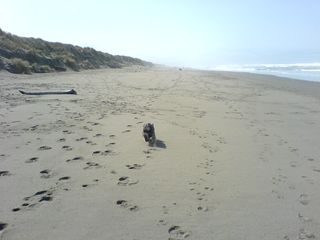
 It's a very sad Saturday evening. Our miniature schnauzer, Waverly, took ill this afternoon and I had to drive her to the hospital. Dr. Cochran said the prognosis was not good. As we looked over Waverly's x-rays, I could immediately see that her liver was enlarged. A mass has formed, and the doctor pointed out how it's pushing against the stomach, creating a kink in Waverly’s esophagus. The spleen and intestines were compressed and pushed over to one side. It was not a pretty picture, and certainly illustrated why Waverly is in pain. We're keeping her in the hospital over the weekend so her pain can be managed and fluids monitored. They'll be doing blood work and getting information ready for Monday morning when we discuss options. Since Waverly is 13, Dr. Cochran mentioned the possibility of needing to put our good old girl down, so I can barely see through my tears as I type this. Lily, our other schnauzer, is feeling a little less feisty as well. I think sleep is in order now, so I hope Waverly has sweet dreams tonight chasing down seagulls on a windswept beach.
Semi-Daily Scribbles
Carving out a corner to post random crap.
recent posts
about
-
-

Stone towers, wishing wells, red roses, and white knights. Many of us understand the symbolism of these images on a subconscious level, so when we speak the meanings out loud, their magic is diminished. The various interpretations of a tower, for example, reside best in a manila envelope inside my head. Heaven forbid I go around in the daylight hours saying princesses are locked up inside of penises. Besides, when filtered through one's cultural affiliations and personal journey, a red knight wearing a white rose will suggest romantic love and the decay of my body. It all works out in the end, so don't fall under the spell of paralysis by analysis. Do not let your original idea have its blood sucked dry. Keep collecting those stories that have a way of absorbing into your pores, and churn the pile with regularity to yield the rich stuff your head and soul requires.This is why I'm enjoying the composting class I'm taking. I can listen to all the fine scholarly talk, and at the end of the day lock it away in a cedar chest. Under the light of the moon, when my body's at rest and my mind takes flight, the notes I scribbled down from the lecture make sense. In Dreamland I drape blue velvet over muscle and bone, and rifle through thrice folded comments in The Suggestion Box. I take leave of my lessons with the sunrise, and go out into the world understanding the power I hold over the simple placement of words.
-
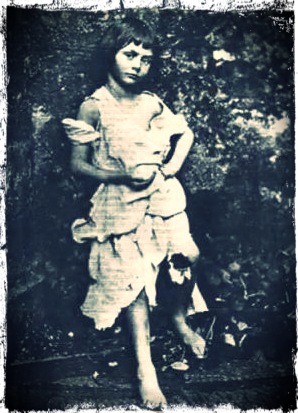 This has been a very positive and productive week. On the WIP front, I'm a day away from letting the ink dry on the first run-through of my novel. I'm excited about a 4th quarter filled with revisions, re-writes, hair pulling (my own, no one else's…I hope), addition, subtraction, multiplication, and any other magic I can conjure.
On the literary enrichment front, I'm happy that my fellow Courserians commented that my "Alice in Wonderland" essay contained good ideas that were unusual and original. I didn't support my thesis in a cogent manner, but there's always room for improvement, and I'll utilize this week's feedback as I take a stab at "Dracula." At least I didn't get called out for committing the "P-Word." Plagiarism has left a nasty stain on some of my fellow student’s essays, and we shall see how the Coursera staff addresses this unfortunate turn of events.
Here's how my peers assessed my Unit 2 assignment ~
FORM
student1 → The sentences used in this text are grammatically correct, which is not surprising, as many of them are by Lewis Carroll. Punctuation, grammar and spelling are well used. The exposition and argument, however, are not clear. It seems that the writer tried to write about too many things at once.
student2 → Do not use the contractions in formal writing. I also appreciate bigger paragraphs, but tastes differ. Your spelling and grammar are good.
student3 → The form is good, all the paragraphs have a beginning, a middle and an end. However, a think the author could use the space to write more and use less citations, or use the "works cited" box.
student4 → I like the form, very fresh, in certain way. But your argument is not enough clear.
Score from your peers: 2
CONTENT
student1 → This essay contains a fine display of quotations from the book, too many, perhaps. It is difficult to understand the argument chosen by the writer. The idea of Alice as a book where science and physics are explored, is an interesting one. The deviation, however, into travels of shamans and open-mindedness of the young, distracts and confuses the main theme. The writer would benefit from quoting less and writing more, as he/she has good ideas that would be valuable contributions to the appreciation of the story.
student2 → I liked your analysis very much. It is rather unsual, and definitely differs from everything I have read. Great job! However, do not get carried away with quotes. They make almost a half of you essay.
student3 → The content was good too, we had similar opinions about the books and how Alice is in a discovery journey and I liked the parts the author focused on.
student4 → The idea of Alice as a scientist is very original and makes sense but for some reason is not enough persuasive.
Score from your peers: 1.5
-
 Zoë thought living a Spartan life would build character. Maybe she’d come by some spiritual enlightenment if she possessed only one cereal bowl. She didn’t even want to think about looking for another job. Zoë excelled at surliness, which put her out of the running for people-y positions. Down at the warehouse, as long as she pulled her weight, no one gave a shit if she didn’t chitchat or crack a smile. Zoë didn’t have the energy to mess with proper social skills. Annabelle was the stickler for decorum, and see what it got her? Decorum got her a daughter and a son that aren’t right in the head. Zoë decided to make the most of her self-imposed exile.
 -

Fantasy and Science Fiction: The Human Mind, Our Modern World – Coursera Assignment 2
Alice’s Adventures in Wonderland
Through the Looking Glass“Who am I then? Tell me that first, and then, if I like being that person, I’ll come up: if not, I’ll stay down here till I’m somebody else.” To answer Alice’s inquiry, I suggest she’s a fine scientist. Her inquisitiveness makes her view Wonderland as an anthropologist and physicist would. In dreams, Alice needn’t adhere to Victorian gender roles. She is at the forefront of scientific exploration.
We meet Alice with her sister on a bank, daydreaming, when the White Rabbit appears. Alice the Anthropologist takes a trip to the spirit realm when she jumps. Shamans visualize portals like holes in hedges to travel to the underworld. A tunnel transports the shaman to a reality populated by animals and plants that offer spiritual guidance. The wisdom Alice seeks in Wonderland is how to say goodbye to childhood without forgetting its magic. The impossible is so easily managed when one is seven. “For, you see, so many out-of-the-way things had happened lately, that Alice had begun to think that very few things indeed were really impossible.”
“Through the Looking Glass” offers Alice lessons in physics. Can time run backwards in other universes? According to the White Queen it does.
“The rule is jam tomorrow and jam yesterday but never jam today.”
“It must come sometimes to ‘jam today,’” Alice objected.
“No it can’t,” said the Queen. “That’s the effect of living backwards.”
The great advantage, the White Queen tells Alice, is that one’s memory works both ways. One can say this is the foundation for time travel. Alice also debates cake and backward causation with the White King, a Lion, and a Unicorn. “You don’t know how to manage Looking-glass cakes,” the Unicorn remarked. “Hand it round first, and cut it afterwards.”
Alice achieved muchness when her dreams challenged our perceptions of reality.
-
 Publicity and feedback. Some assert that there is no such thing as bad publicity. Can the same be said for feedback? More specifically, peer evaluations for a 317-word essay I wrote for an on-line literature course that I'm taking with my buddy Geoffrey. I'm grateful for the comments that six of my fellow students offered in the spirit of helping me become a better writer and reader. We received our essay assessments today, so I'm still in an absorbing and understanding phase. In a day or two I'll be ready to filter through the comments and put into practice those suggestions that make the most sense in developing my writing skills. In any event, it's gratifying to set loose into the world a creative work, and have it come back perhaps battered, but better for having passed through someone else’s consciousness.
EVALUATION ON ESSAY FORM
student1 → Strong conclusion showing the two different result from the same start. The opening might have been expanded upon a bit but overall it's good and the main body does a good job illustrating your point.
student2 → Logical, firm, well-structured, clear and easy to read. Since English is not my native language I will not state that the form is perfect, but as far as I am concerned it is flawless. It is good that you manage to compare two different tales in consistent manner, giving enough attention to both without interrupting the thought process of the reader.
student3 → I find it very well structured as far as I can tell, the same with grammar and the usage of words :), but I can always miss something (Hopefuly not this time)
student4 → Good work in structure, vocabulary, grammar and syntax
student5 → The grammar is correct and word is used properly. The structure of the essay needs improvement. The author cites some sentences from Grimm brothers' stories. But it isn't clear that who says the sentences.
student6 → This essay has some confusion, some parts have to be read until the end for you to understand if its talking about a new subject or the same.
Score from your peers: 2
EVALUATION ON ESSAY CONTENT
student1 → The two examples used are a great contrast in results and nicely stated. I think the “The Fisherman and His Wife” was stated much more completely than “The Knapsack, The Hat, and The Horn” but overall this is pretty good.
student2 → The logic is there, I can agree with most statements you make. However, I feel that conclusion “Ask, but be careful what you wish for” only suits the first story. The youngest brother in “The Knapsack, The Hat, and The Horn” didn’t wish for anything in particular; his troubles arise not from his greed, but from others who are unwilling to accept him or his sudden rise to power. Also, I’d say that your assumption of fishermen’s wish could use some additional explanation; nevertheless, this is an interesting thought to consider and some good analysis.
student3 → Even thought the essay makes a point and explains it, it's not so straightforward and for foreign readers can be a little bit difficult to understand. On the other hand the use of quotes illustrating the attitude of the characters was excellent because it helped linking them with the point you’re making
student4 → A very good comparison between the common theme in these two stories. I liked the reference to Bible concerning the "ask and you will be given". I didn't know that there was such a passage in Bible. The only relevant story i know is in "The Alchemist".
student5 → Author states that the exposition is greed and quest for power. The two stories discussed in the essay has nothing to do with the biblical passage of Matthew 7:7. Author should remove it from the essay.
student6 → There is no discussion, or insight about the tale, or the work of the Grimm brothers. The writers simply spoke briefly about a few tales and about one specifc tale in the middle of the essay, but didn't had any insight, nor discussed about it in comparsion to todays world, neither talked a little about why those stories were still alive.
Score from your peers: 2
Please write here any other comments which you feel might be of use to you or the writer of this essay:
student2 → It gladdens me to see that some people actually work on their assignment; good job.
student5 → Author may merge some of the paragraphs together to make the essay clear.
student6 → Watch the video of the class/module and tries to follow it. -

Fantasy and Science Fiction: The Human Mind, Our Modern World – Coursera Assignment 1 Grimm's FairytalesTwo Grimm’s Fairytales that share themes of dissatisfaction, greed, and the quest for power are “The Fisherman and His Wife” (p. 100), and “The Knapsack, The Hat, and The Horn” (p. 222). These stories also explore the biblical passage "Ask and it will be given to you; seek and you will find; knock and the door will be opened to you." (Matthew 7:7). Ask, but be careful what you wish for.
The third brother in “The Knapsack, The Hat, and The Horn” has a hunger that cannot be sated.
“Silver and gold do not tempt me; I will not gainsay fortune, who has better things in store for me." (p. 223).
In this respect, he is a kindred spirit of the fisherman’s wife. The third brother’s ambition is admirable since he ventures out into the world to gain his family’s respect. However, through his actions, we see that absolute power corrupts absolutely. His kingdom is won only after he destroys it. The fisherman’s wife is ambitious, as well, and has designs to rule over the land.
"Well," said the wife, "if you don't want to be king, I will be king." (p. 103).
Her reign is short lived, which makes “The Fisherman and His Wife” an anti-fairytale. Her wish for wealth and power is granted, and then rescinded. Life returns to its humble beginnings in a hovel by the sea. The argument can be made that the fisherman, in the end, has his wish fulfilled, thereby claiming his place of power and restoring balance in the household.
Covetousness, or greed, exhibited by the third brother and the fisherman’s wife, paves the way for very different endings to these tales. “The Knapsack, The Hat, and The Horn” is the triumph of unchecked power, whereas “The Fisherman and His Wife” is the aftermath of power that has been taken away.
-
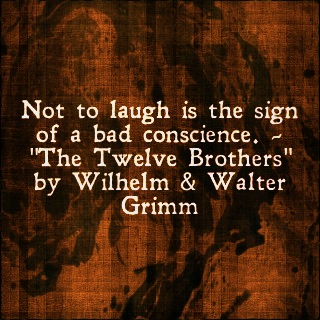
I had let slip to a friend that I wasn't sure what the last three years were supposed to have meant. It was a moment in which I lost focus, forgot my usual good humor, and equally good sense. The fact that I made a friend is all the meaning one need give to the passage of time. Weak, weak I was, and enjoying the bitter flavor of self-pity. Today is another chance to make it right. Today I'll get back to laughing. I'm happy and grateful for the lessons that have come my way. No time for regrets now. The task at hand is ready to take flight.


 Semi-Daily Scribbles